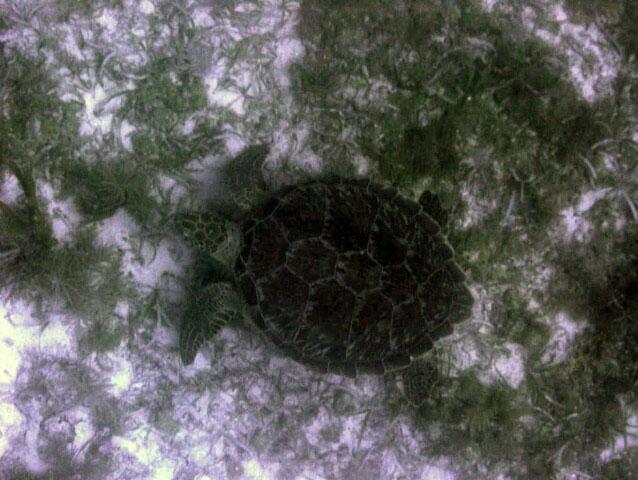
A £1.8 million marine recovery programme in Cornwall is attempting something conservation has historically struggled to do: turn a fragile, underwater plant into a project with measurable hectares, auditable funding lines, and a timetable. The initiative—called Mor Nature—aims to restore 10 hectares of seagrass meadow in Falmouth Bay over three years, alongside the recovery of native oysters across two Special Areas of Conservation in the Fal and Helford system, according to the Ocean Conservation Trust.
For investors, policymakers and coastal communities watching the fast-moving "blue carbon" market, the significance is less the size—10 hectares is small on a global map—than the structure. Mor Nature is backed by £1.4 million from Defra’s Species Recovery Programme plus additional partners, and is being delivered through a partnership between the Ocean Conservation Trust (OCT) and Cornwall Wildlife Trust (CWT), the OCT said. That kind of blended support is increasingly what coastal restoration needs: grants to start, but monitoring and governance good enough to make future finance plausible.
A restoration project with a baseline
Mor Nature’s site runs between Swanpool and Pendennis Castle in Falmouth Bay, where OCT first installed Sensitive Habitat Marker Buoys and voluntary no-anchor zones in 2022 to protect existing seagrass, according to OCT. CWT will work with fishers and community groups to establish new oyster nurseries in the Helford, OCT said.
“Mor Nature represents a major milestone for marine restoration in the UK. We’re not simply planting seagrass; Mor Nature represents the holistic cultivation of an entire underwater garden, nurturing the relationships between interdependent species and habitats that will allow a plethora of marine life to thrive.” — Ocean Conservation Trust (project statement)
In practical terms, the work involves more than divers placing seedlings. Funding will be used to trial robotic seagrass planters on a small patch of the meadow, while most of the 10 hectares will be planted by OCT divers, OCT said. The programme also includes monitoring, community stewardship, and public-facing events—citizen science projects, snorkel safaris and educational activities—designed to keep boat traffic, anchoring and shoreline pressures aligned with the biology.
Why seagrass has become a balance-sheet ecosystem
Seagrass meadows occupy the coastal fringe where climate adaptation, fisheries and water quality collide. UNESCO’s Intergovernmental Oceanographic Commission (IOC) groups seagrasses with mangroves and salt marshes as “blue carbon” ecosystems—highly productive habitats with significant carbon stored in plants and underlying sediments, as described by UNESCO IOC. The same page notes that blue carbon ecosystems can sequester “two to four times more carbon than terrestrial forests,” a claim that has helped draw attention to restoration as a climate tool.
The economics, however, are still catching up with the ecology. Many voluntary-market methodologies and national inventories are more mature for mangroves than for seagrass. Projects like Mor Nature matter because they produce the hard-to-fake ingredients: mapped meadows, local governance, and repeatable field methods.
“Native oysters were once a defining feature of Cornwall’s seas, creating thriving underwater habitats that supported wildlife, fisheries and coastal communities. Through Mor Nature, we have an opportunity to restore not only oyster populations, but the ecological functions they provide.” — Dr Dan Barrios-O’Neill, Head of Marine Conservation, Cornwall Wildlife Trust
From stewardship to scale
Mor Nature explicitly frames its model as partnership: conservation organisations, local communities, government and industry collaborating “to restore nature at scale,” OCT said. That is where a restoration programme becomes relevant beyond Cornwall. The physical reality of seagrass—shallow waters, competing uses, damage from anchors and poor water quality—means successful projects tend to be local by necessity. Scaling, paradoxically, often means replicating many locally-owned projects with similar standards rather than building one massive one.
For OceanVines, the lesson is familiar. Our mission is to illuminate the inner sparks of every life we touch through our efforts in ocean conservation and education. Restoration only sticks when it is taught, practiced, and defended by the communities who live nearest to it—and by the students who will inherit it.
In a year when ocean headlines often skew toward heat stress, plastic leakage and contested fisheries, it is worth tracking the quieter projects that move from ambition to implementation. Ten hectares of seagrass will not change the climate. But a credible template—funded, monitored, and stewarded—can.
Together, we celebrate The Greatest Good.